
He Wasn’t Naughty. He Was Overwhelmed.
One year, while I was teaching Grade 1, I had a student who was often late to school. When he arrived, it was clear his morning had already taken a toll. His backpack would hit the floor with force. He struggled with the zipper, fingers fumbling as if they were not quite cooperating. His jaw stayed clenched. His eyes darted around the room, scanning and bracing, trying to understand what he had walked into. Before the school day had even begun, his body was already working hard just to keep it together.
His emotions were all over the place. His reactions were quick and intense. If his pencil broke, he crumpled. Tears came suddenly and with force. If another student brushed past his table, even accidentally, he reacted immediately and shouted at his classmates. Everything felt agitating to him. Even when I redirected him with a calm, loving voice, he shut down. He crossed his arms, hid under the table, or slammed his head down on his desk. His nervous system was in charge, and his thinking brain had no access to reasoning.
From the outside, it might have looked like he was being naughty. But what I was seeing was a child who did not yet have the skill of emotional regulation. He could not slow his body down once it tipped into overwhelm. He was not choosing these reactions, nor was he able to stop them. This was not a behavior problem.
Over time, a pattern became impossible to ignore. He was only like this in the morning. By first recess, he was calmer. By mid-morning, he could laugh, collaborate, and engage in his learning, and by the afternoon, he was often one of the most regulated and well-adjusted children in the room. Nothing about our expectations or the classroom environment changed. What changed was his internal state. He had been given tools.
Being late meant more than missing the start of the day. It meant rushing. It meant a perceived urgency in adult voices. It meant tension without words. Children do not need explanations in order to feel stress. They absorb it through tone, pace, posture, and silence. They feel it in the grip of a hand, the clipped reminder to hurry, and the emotional charge that builds when time feels tight. What I began to understand was that his nervous system was already flooded by the time he arrived at school. He was carrying the emotional residue of his morning long before he ever sat down in his seat.
This is an example of why emotional regulation became a non-negotiable part of my classroom. I was teaching the intentional art of self-control, not to suppress emotions, but to support the body through hard ones. When this student arrived late and dysregulated, I did not ask him to explain what had happened. I did not try to correct his reactions. I did not try to reason with him. Instead, I responded to what his body was communicating and offered him safety.
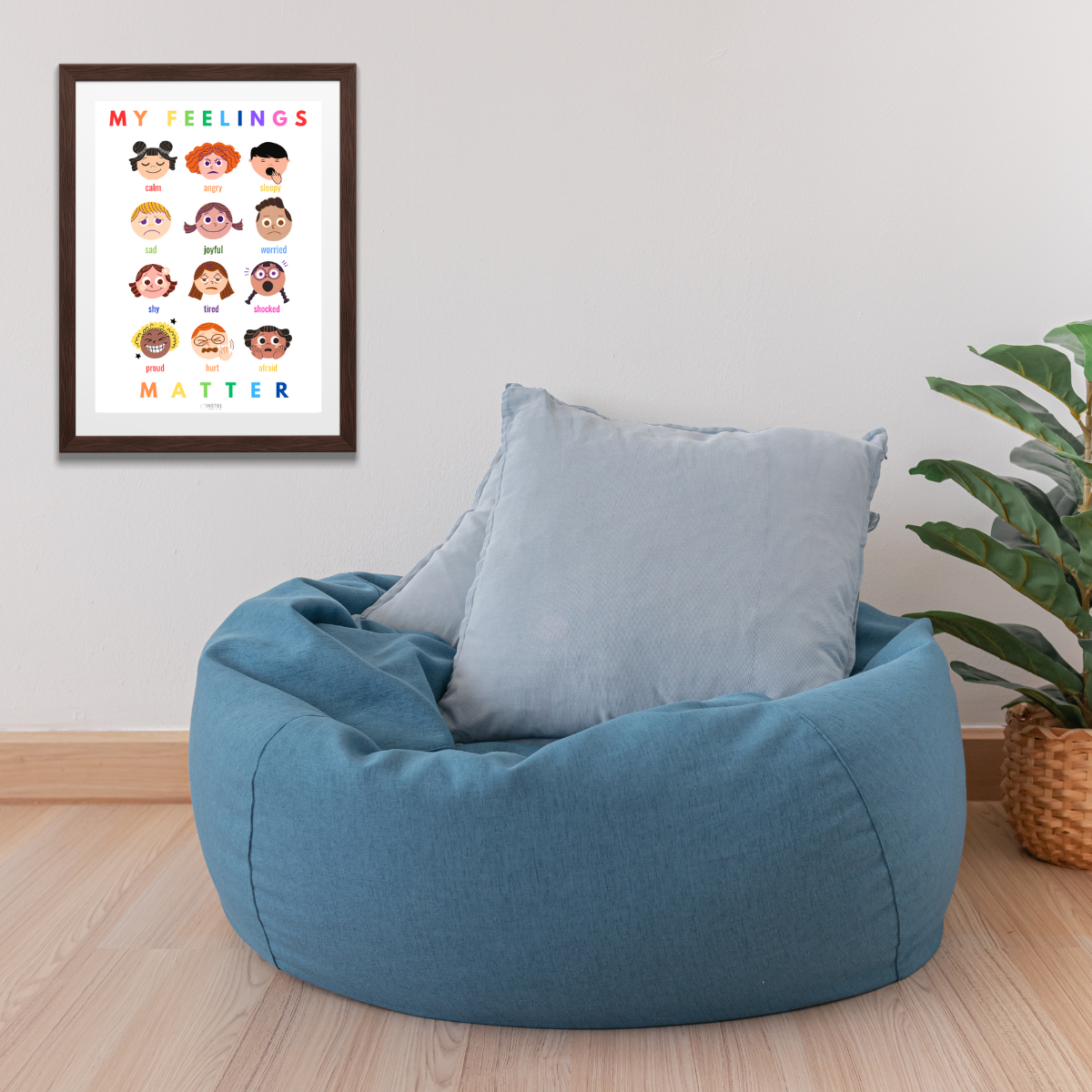
It became a routine. Each morning, he was welcome to sit in our classroom Calm Corner. This was not a place children were sent when they had done something wrong, but a space they were taught to use when their bodies felt like too much. It was predictable and intentionally simple, offering a soft place to sit, a feelings visual on the wall, and self-regulation materials to quietly explore. There was no need to talk. It was a peaceful retreat for students who felt overwhelmed, a space where they could come and go as needed without explanation.
Most mornings, he settled in without hesitation. Sometimes he reached for the mindful coloring pages. Other days, he picked up an affirmation card and began to read. He would make up songs for the words, singing them with intensity at first. Slowly, his voice softened. You could see his breathing change. His shoulders dropped. His body language shifted. When his nervous system settled, he independently rejoined the room and began his day. Until his body felt safe, he simply did not have access to formal learning.
Over time, experiences like this reshaped how I understand emotional regulation. Emotions move faster than the brain can process language. When children are overwhelmed, words disappear, logic retreats, and small moments feel enormous. Emotional regulation is not a thinking skill. It is a body-based one. Calm corners exist in classrooms because they restore the conditions that make learning possible. They communicate a simple message to children: You are safe.
Many parents likely see this same pattern at home. It shows up in the child who falls apart over the wrong socks, the meltdown that erupts the moment they walk through the door, or the bedtime routine that feels heavier than it should. These moments are not random. They are signs of a nervous system that has absorbed more stress than it can manage. A calm corner, or a safe space at home, gives children somewhere to land. A place where their bodies can slow down before emotions spill out sideways.
This is why I now teach parents about emotional regulation. Not because children need to be controlled, but because they need tools and skills they have not yet learned. Children are not born knowing how to control their emotions. They learn through regulation first. Regulation is the foundation that gets children there. It is built through calm, consistent support, safe environments, and regulated adults who understand that behavior communicates a message. Parents learn this skill too. Your calm becomes your child’s calm.
What I hope parents hear in this story is this. Big emotions do not mean something is wrong with your child. They mean your child’s nervous system is still learning how to feel safe and steady. When we meet that with understanding instead of urgency, we give children exactly what they need to grow into regulation, resilience, and emotional strength.
If you are reading this and recognizing your own child, you are not alone. Many parents want to support emotional regulation but are unsure where to start.
I created my own calm corner tools and used them in my classroom, where I watched them help children settle their bodies and return to learning. Now I share those same tools with families to use at home. You can explore the collection HERE, inspired by real classroom experience and designed for everyday family life.
Empowering your family, one regulated moment at a time.

